How to Estimate Body Fat Percentage from Photo Men, Photo Male, and Mirror Selfie

If you searched for terms like "how to estimate body fat percentage from photo men" or "from mirror selfie," this guide is built for that exact use case.
Photo-based body fat estimation can be useful, but only when you use consistent photos and interpret the output as a range. Below, you will see what visual cues matter, where estimates fail, and how to improve your accuracy.
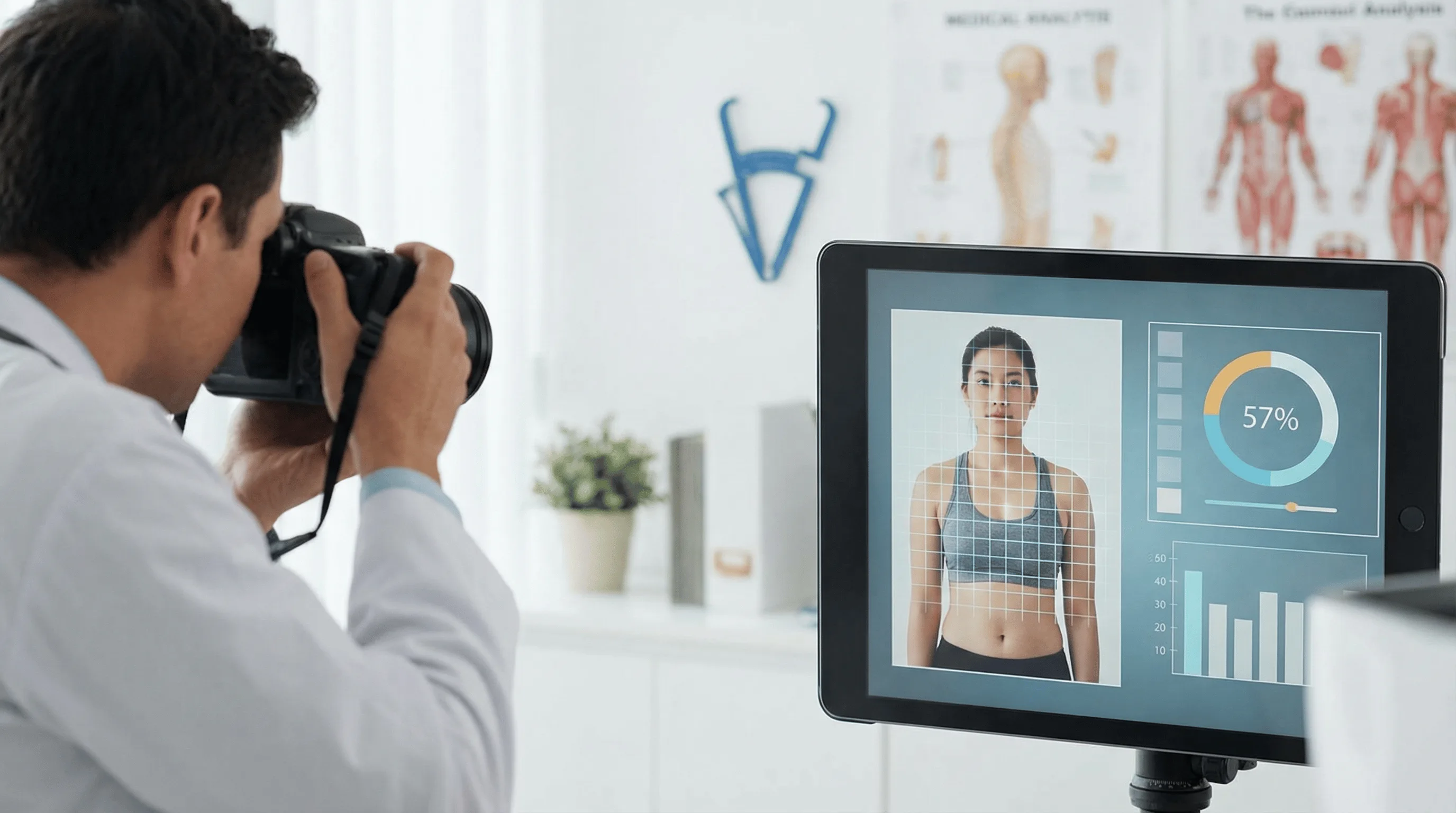
Quick Answer + Free Tool
If you searched for "how to estimate body fat percentage from photo men", "from photo male", or "from mirror selfie," use a consistent front + side photo setup and estimate a range, not an exact number.
- Take one neutral front photo and one side photo in even lighting.
- Keep camera height, distance, posture, and clothing the same each check-in.
- Use a repeatable estimate workflow and compare trends every 1 to 2 weeks.
Quick Answer: Estimating Body Fat From Photos
You can estimate body fat percentage from photos by comparing visible cues such as abdominal definition, waist shape, limb softness, and fat distribution patterns. The estimate is usually a useful range, not an exact value.
For most people, photo estimates are most helpful for tracking trend changes over weeks. They are less reliable as a one-time precision measurement.
- Use front and side photos with the same lighting.
- Keep camera height, distance, and posture consistent.
- Avoid flexing, angle tricks, and dramatic shadows.
- Compare changes over time, not one isolated scan.
How To Estimate Body Fat From a Photo Yourself
If you want to estimate body fat manually, think in terms of ranges. One photo rarely gives a perfect number, but specific visual patterns can place you in a useful bracket.
Men: Quick Visual Range Guide
- 10-12%: visible abs at rest, minimal love handles, more vascularity.
- 13-15%: upper abs usually visible, slight lower-ab softness, very small love handles.
- 16-19%: abdominal outline fades, moderate lower-ab softness, clear love handles in relaxed posture.
- 20-24%: no visible abs at rest, softer chest and waist, stronger side fat accumulation.
- 25%+: rounded midsection, larger love handles, less separation in chest and shoulders.
Striations, Definition, and What They Usually Mean
- Deep ab striations and clear obliques usually indicate low-teens or sub-12% for men under neutral lighting.
- Visible abs only when flexing usually points to a mid-to-high teen range.
- If no abdominal lines are visible in consistent photos, body fat is often above high teens for men, though muscle mass still affects appearance.
Women: Common Appearance Ranges
- 18-22%: lean waist profile, clearer muscle lines, lower arm and thigh softness.
- 23-27%: mild waist softness, less separation through midsection and legs.
- 28-33%: noticeably softer midsection and limbs, less definition overall.
- 34%+: greater softness through waist, hips, and thighs with reduced contour visibility.
Use these as directional ranges, not diagnosis. Lighting, pump, posture, and genetics can shift visual appearance by several percentage points.
Estimate Your Body Fat from a Photo
Upload a photo, get an appearance-based estimate, and track trend changes over time with a consistent workflow.
Men: Visual Cues That Matter Most
For men, estimates often depend most on abdominal contour, oblique visibility, chest definition, lower-back softness, and jawline sharpness. Single cues can mislead, so a full-body pattern matters more than one body part.
If you are searching for "how to estimate body fat percentage from photos men," focus on consistency first. Variations in lighting and posture can make the same person look multiple percentage points leaner or softer.
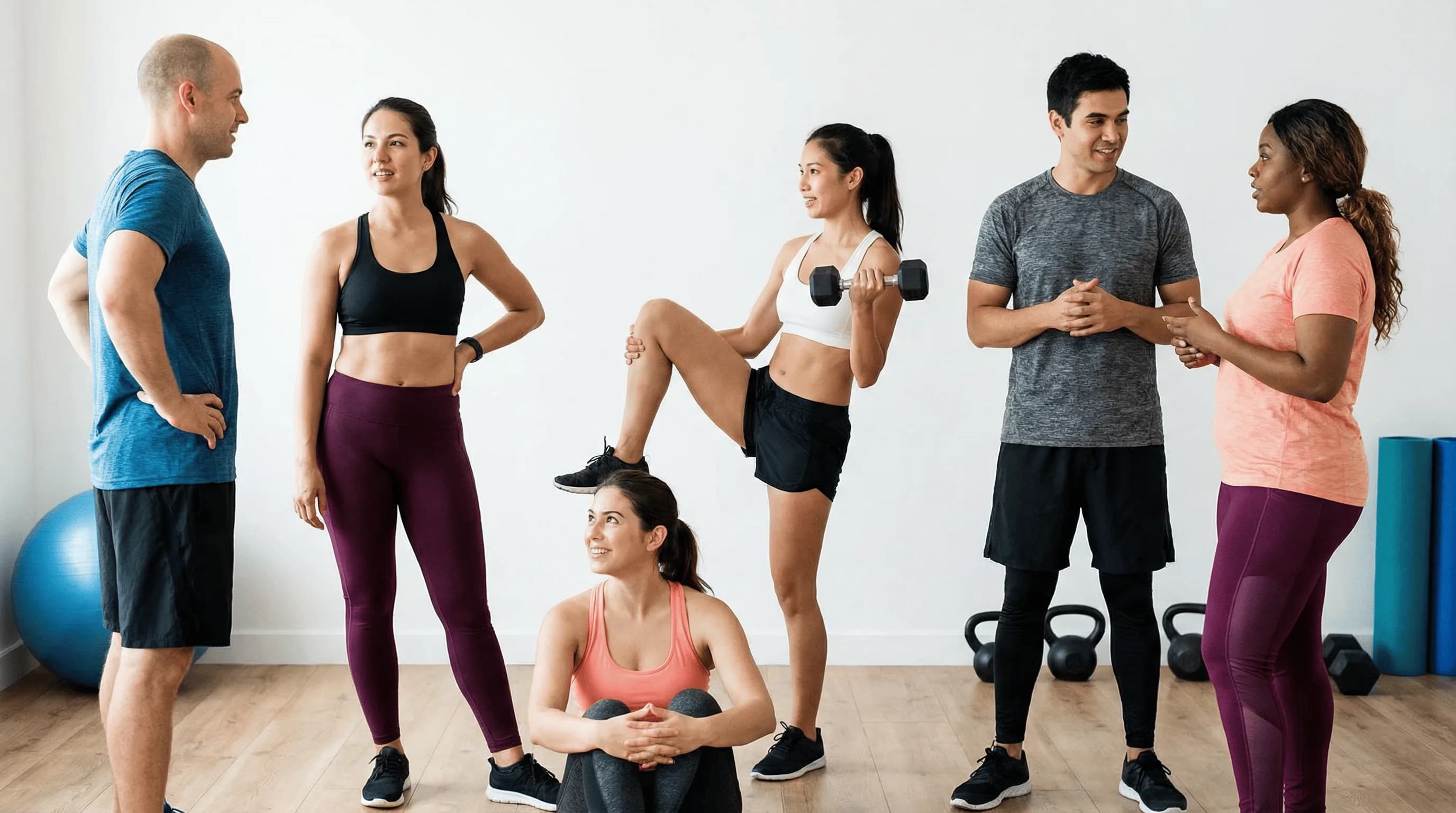
Women: Visual Cues That Are Often Weighted Differently
For women, fat distribution around hips, thighs, upper arms, and the waist-to-hip profile often contributes more to appearance-based estimation. Two women with the same estimated percentage can still look meaningfully different due to distribution and muscle mass.
This is one reason photo-based methods should be interpreted as trend tools. They are strongest when you compare your own images over time under repeatable conditions.
Mirror Selfie Checklist for Better Estimates
Mirror selfies can work well if your setup is repeatable. The goal is to reduce visual noise so body composition changes are easier to detect.
- Take photos at the same time of day each week.
- Use the same room lighting and phone camera.
- Set camera height near mid-torso to reduce distortion.
- Stand relaxed in the same front and side pose.
- Use similar minimal clothing each check-in.
Detailed setup guide: how to take photos for body fat estimation.
FAQ
Can you estimate body fat percentage from one photo?
You can estimate it, but one photo is best treated as a rough range. Accuracy improves when photos are consistent in lighting, distance, pose, and clothing.
How accurate is photo-based body fat estimation for men?
For men, photo estimates are usually directionally useful rather than exact. They work best for tracking trend changes over time, not proving a single perfect number.
Do mirror selfies work for body fat estimation?
Yes, mirror selfies can work if setup is consistent. Large changes in angle, flexing, lighting, or camera distance can make estimates less reliable.
Get Your Estimate and Track Progress
Use the same photo setup each week so your estimate is comparable over time and easier to act on.
References
Read More →
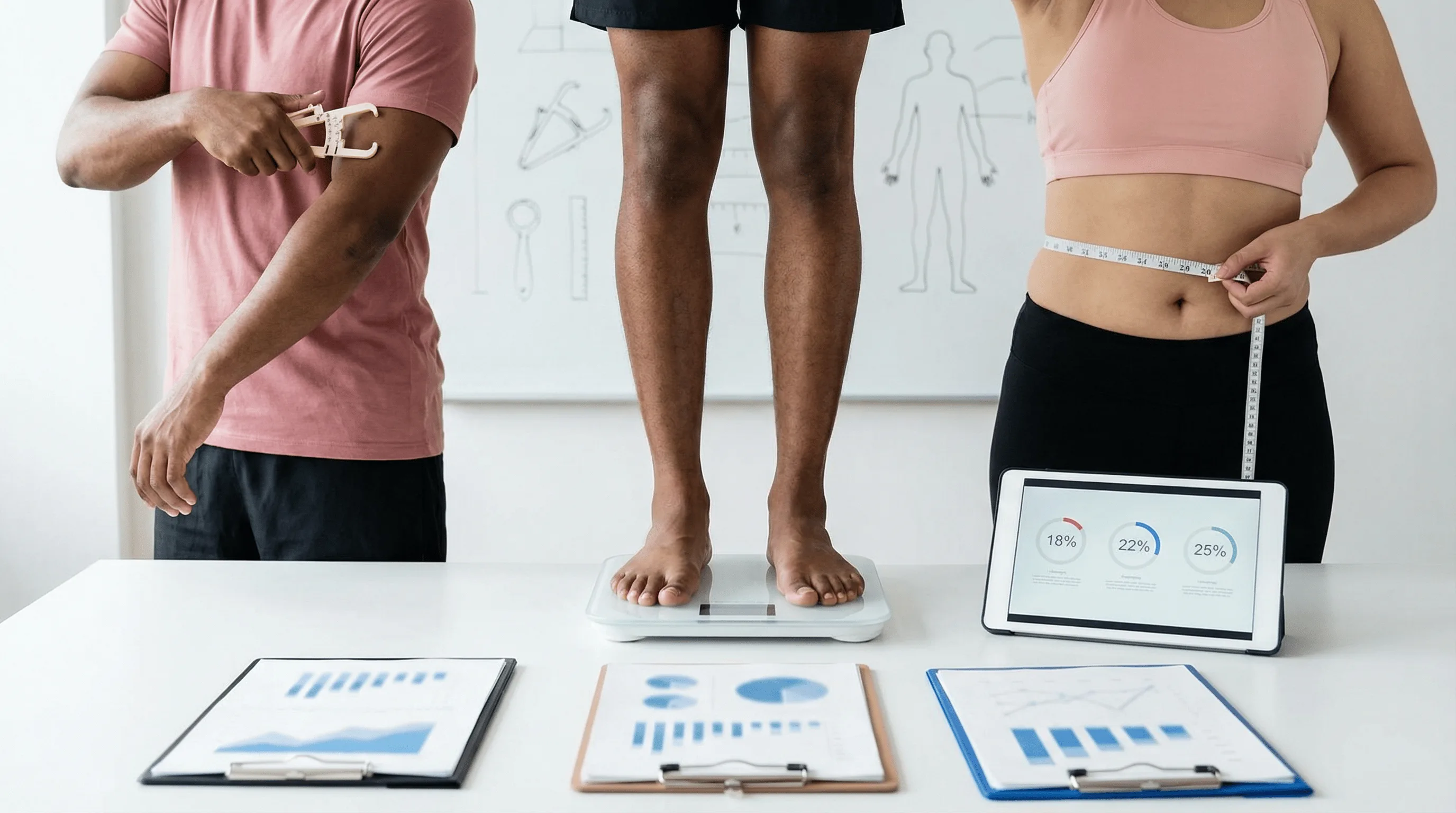
Why Body Fat Measurement Methods Give Different Results
DEXA, smart scales, calculators, and visual estimates often disagree. Learn why body fat measurement methods give different results and how to interpret them correctly.
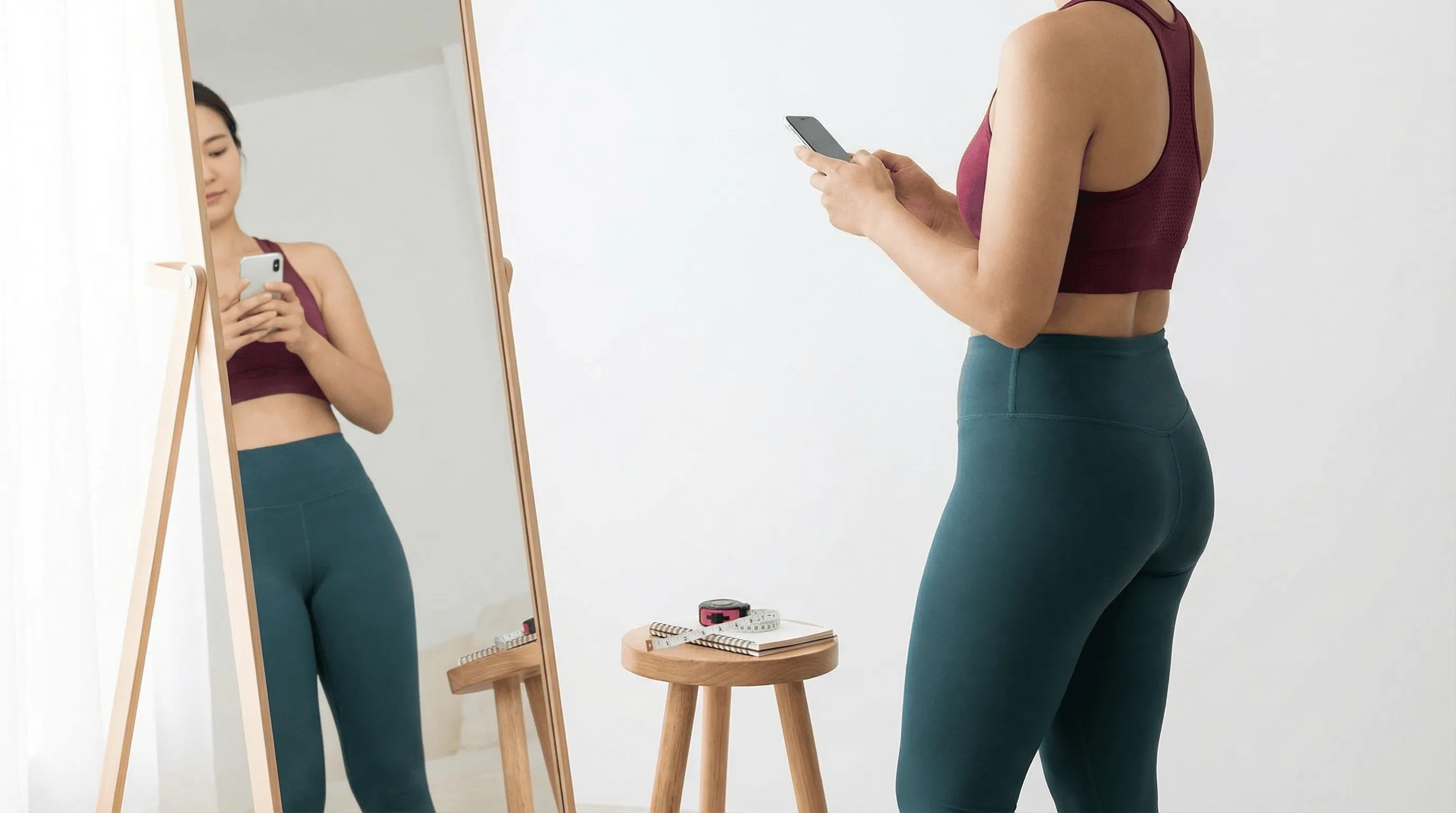
How to Take Photos for Body Fat Estimation
Learn how to take consistent body fat photos for estimation and progress tracking, including lighting, pose, camera setup, and common mistakes to avoid.
How Often Should You Measure Body Fat?
How often should you measure body fat? Learn how measurement frequency affects accuracy, why daily checks create noise, and how to track progress realistically.
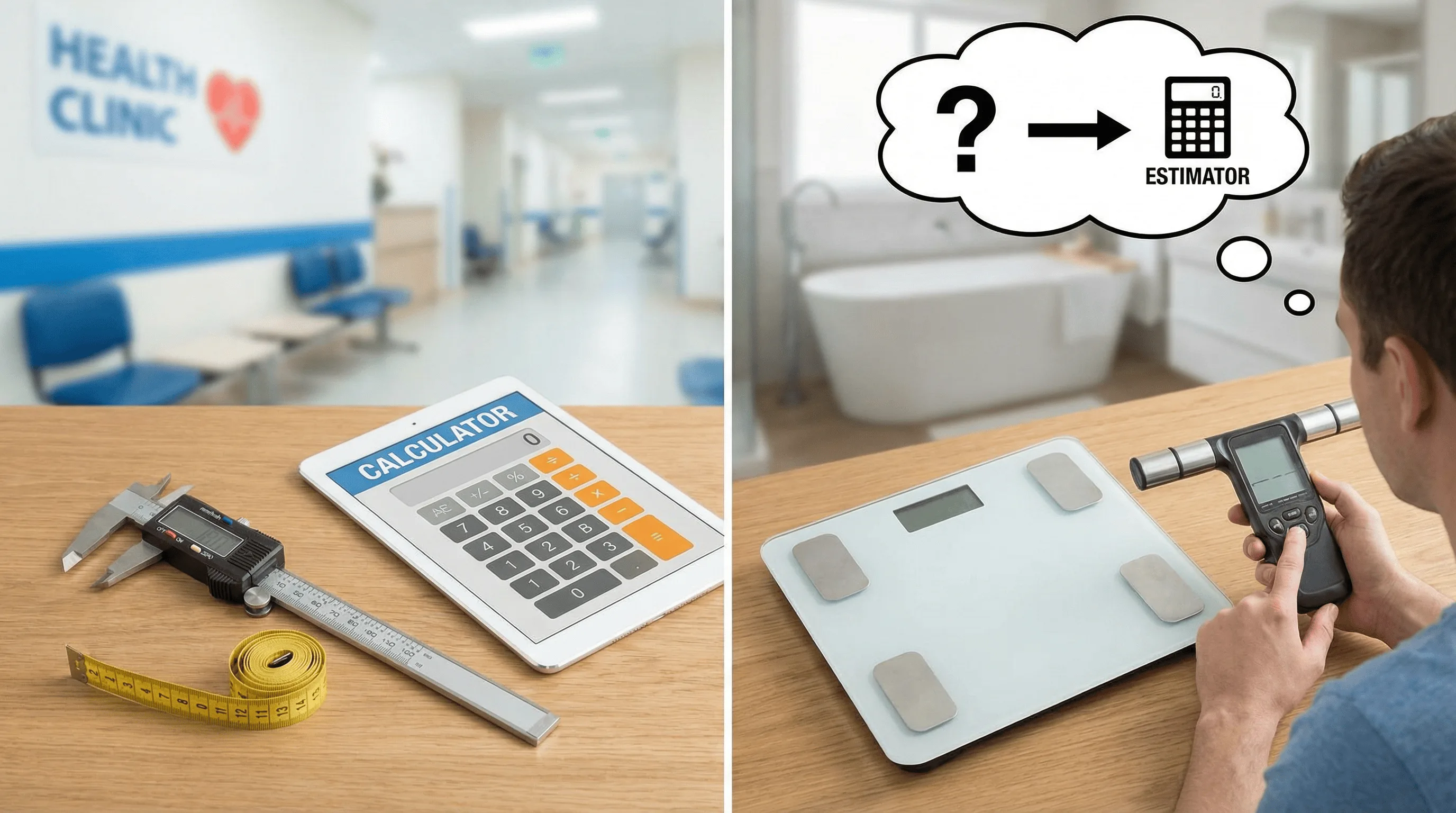
Body Fat Calculator vs Body Fat Estimator — What’s the Difference?
Learn the difference between body fat calculators and estimators, why they give different numbers, and which method is best for tracking progress at home.