Macro Tracking for Weight Loss Workouts

Macro tracking helps you lose fat while keeping muscle by balancing protein, carbs, and fats around your training. Here is a practical setup guide covering TDEE, workout timing, and AI-assisted tracking with Skoy.
Published April 13, 2026 · 12 min read
Macro Tracking for Weight Loss Workouts
Macro tracking helps you lose weight while preserving lean muscle by focusing on protein, carbohydrates, and fats, not just total calories. Instead of relying on broad calorie guesses, this approach gives you a structured way to fuel training, recover well, and make better weekly adjustments.
The process starts with your Total Daily Energy Expenditure (TDEE), then uses targeted macro ratios to support fat loss without crushing workout performance. When done consistently, macro tracking improves both adherence and decision quality over time.
- Protein: Supports muscle retention and recovery. A common target is 0.7-1.0 g per pound of body weight.
- Carbs: Power training and help replenish glycogen after sessions. Intake usually shifts with activity level.
- Fats: Support hormone function and nutrient absorption. A common range is 20-30% of daily calories.
- Tracking: AI tools like Skoy simplify macro logging so consistency is easier to maintain.
- Progress control: Use weekly trends and measured adjustments instead of aggressive calorie cuts.
Complete Macro Tracking Guide for Weight Loss Workouts
The most effective macro plans are practical, not extreme. Keep portions repeatable, align pre- and post-workout meals with your training demand, and make changes only after enough data has been collected to justify them.
Setting Up Your Macros for Weight Loss
Calculating Your TDEE (Total Daily Energy Expenditure)
TDEE is the total energy your body burns in a day. It includes your Basal Metabolic Rate (BMR), structured exercise, non-exercise activity thermogenesis (NEAT), and the thermic effect of food (TEF). In practice, NEAT is a major reason two people of similar size can have very different maintenance calories.
A common starting method is the Mifflin-St Jeor equation. For men:
BMR = (10 x weight in kg) + (6.25 x height in cm) - (5 x age) + 5
For women, use the same formula but subtract 161 instead of adding 5.
After estimating BMR, multiply by an activity factor. Many office workers who train 3-4 days per week land near 1.375 to 1.55. For fat loss, reduce intake by about 10-25% (typically 300-500 calories for many users), which often yields sustainable progress while helping preserve muscle.
"Your TDEE is your starting line, not the finish line. It's a living number that changes with your body, lifestyle, and training." - Marc Lobliner, IFBB Pro, Tiger Fitness
Keep in mind that TDEE can drift down during a cut, partly because spontaneous movement falls. Tracking daily steps is a practical way to reduce that drop in real-world settings.
Choosing Macro Ratios for Weight Loss
Start with protein first because it has the largest impact on lean-mass retention in a deficit. A common range is 0.7-1.0 grams per pound of body weight (1.6-2.2 g/kg). Protein also has a high thermic effect, which slightly increases total energy expenditure during digestion.
Next, set fat intake to support hormonal health, often around 20-30% of total calories (or about 0.6-0.8 g/kg as a practical anchor). Then allocate remaining calories to carbs, which support training output and recovery.
A common starting template for active fat-loss phases is 40% protein, 30% carbs, 30% fat. If training volume is high, carbs often need to be increased for better gym performance and lower fatigue.
Timing Your Macros Around Workouts
Pre-Workout Macro Targets
Pre-workout nutrition should match the time available before training. If you only have about 30 minutes, choose quickly digested carbs with a small protein serving, like a banana and a shake. Keep fat low so digestion does not slow session readiness.
With 2-3 hours before training, a fuller mixed meal works well. Many athletes do fine with around 25 g protein, 50-60 g carbs, and moderate fat in this window. If your pre-workout meal is 4-6 hours out, portions can be larger.
"Your workout doesn't start when you pick up your first dumbbell - it starts in the kitchen." - Nick Carrier, Best You, LLC
Carbs are typically your main training fuel because they replenish glycogen. Very high-fat snacks close to training are often less useful for immediate output.
Post-Workout Macro Adjustments
After training, prioritize protein and adequate carbs. A practical protein target is 20-40 grams of high-quality protein in the first post-workout meal. For fat-loss phases, many users stay closer to 20-30 grams while keeping daily calories controlled.
Carbs still matter during cutting phases because they support glycogen restoration and next session quality. A moderate post-workout carb strategy usually works better than cutting carbs too aggressively, which can increase fatigue, cravings, and recovery issues.
| Meal Option | Protein | Carbs | Fat |
|---|---|---|---|
| Greek yogurt + berries | 31 g | 41 g | 23 g |
| Chicken + brown rice + vegetables | 30.4 g | 31.7 g | 4.2 g |
| Cottage cheese + fruit | 25 g | 39 g | 2.7 g |
Whole-food meals usually provide better satiety and steadier blood sugar compared with heavily processed alternatives, which helps long-term adherence.
Tracking Macros with AI-Powered Tools
How Skoy Simplifies Macro Tracking
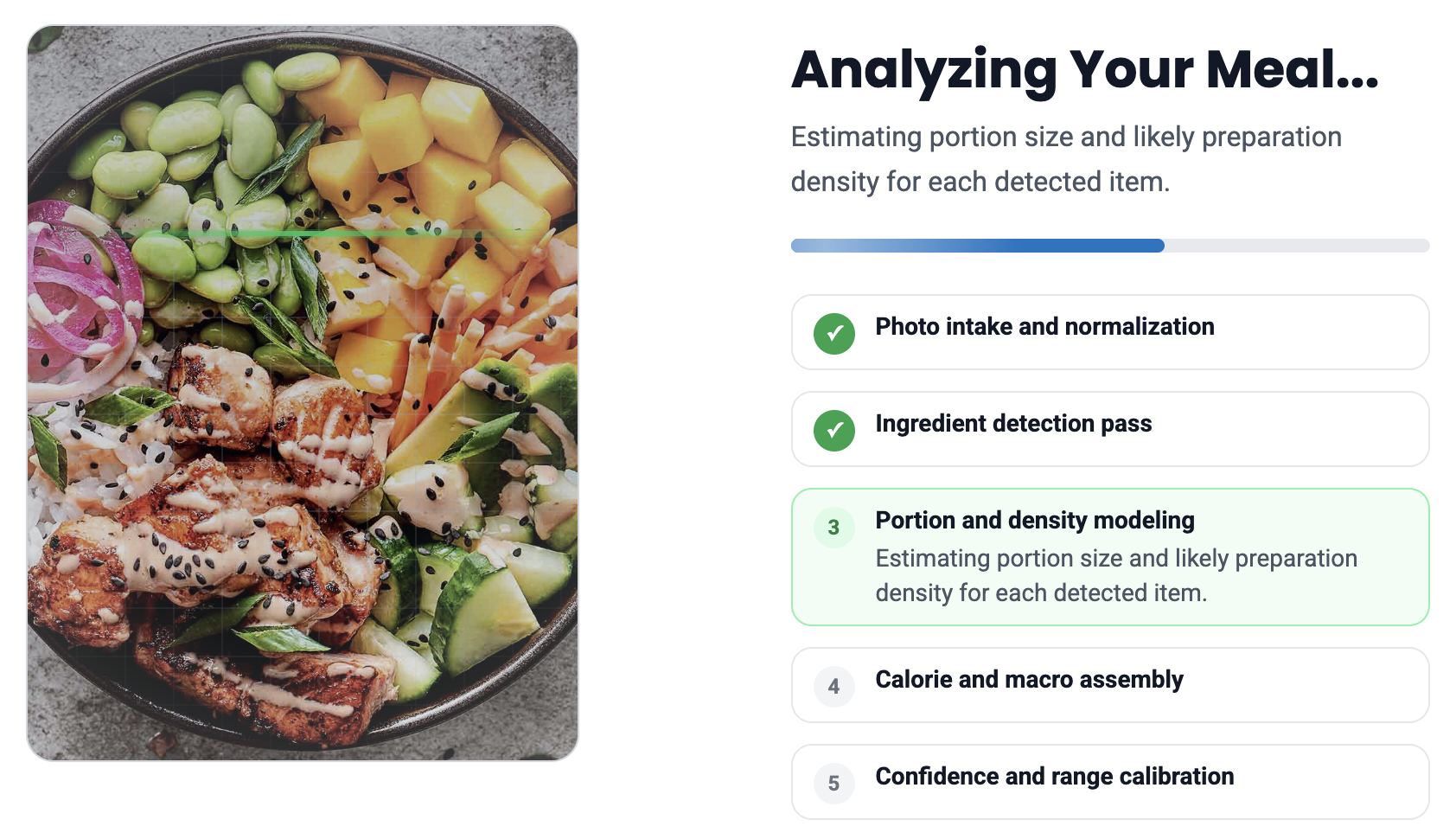
Manual logging can take multiple minutes per meal between search, weighing, and entry. Skoy reduces this friction by letting users upload a meal photo and receive a macro breakdown in seconds.
The system recognizes more than 10,000 foods, estimates portions, and returns calories, protein, carbs, and fat quickly enough to support in-the-moment decisions before or after training sessions.
"The accuracy and clarity help our athletes understand what fuels their performance. It's like having a dietitian assistant available 24/7." - Gemma Ray, RDN, Sports Nutrition Partner
Skoy stores scan history so users can review patterns over time, catch missed targets, and improve consistency without manual spreadsheets.
Benefits of AI-Powered Food Analysis for Weight Loss
AI photo logging can reduce tracking time and improve consistency, which is often the real bottleneck in fat-loss nutrition. Manual tracking commonly underestimates intake, especially on busy days or mixed meals.
| Feature | Manual Tracking | AI Tracking (Skoy) |
|---|---|---|
| Time per meal | 2-3 minutes | About 7-12 seconds |
| Accuracy behavior | Frequent under-reporting | Higher consistency via image pipeline |
| User effort | High | Low |
| Method | Subjective estimation | Computer vision + nutrient mapping |
Skoy offers free logging and history, while premium features extend into macro analytics and progress tracking for users who want deeper coaching-style feedback.
Adjusting Macros Based on Progress
Monitoring Progress and Identifying Plateaus
Day-to-day scale noise is normal. Weekly averages are far more useful for judging whether your plan is actually working. Weigh daily under consistent conditions, then compare weekly trend lines instead of isolated weigh-ins.
Also track body measurements every two weeks and progress photos monthly. A true plateau is when scale trend, measurements, and visual changes all stall for 2-4 weeks despite solid plan adherence.
| Monitoring Method | Frequency | Purpose |
|---|---|---|
| Scale weight (weekly average) | Daily weigh-ins | Trend tracking |
| Body measurements | Bi-weekly | Detect fat-loss changes |
| Progress photos | Monthly | Visual body-composition validation |
Before changing macros, audit your logging quality for 7-14 days to catch hidden calorie drift from untracked snacks, oils, or under-measured portions.
Adjusting Macro Ratios to Continue Losing Fat
If progress has stalled for multiple weeks, use measured adjustments. Start with a 5-10% calorie reduction (often 100-250 calories/day for many users), usually by trimming carbs and fats while keeping protein high.
Recalculate macros after every 5-10% body-weight change so targets stay aligned with your updated TDEE. If food reduction is already difficult, increase activity instead (for example higher daily step counts) to create deficit without over-restricting intake.
Macro Tracking Mistakes That Slow Fat Loss
- Ignoring hidden fats from oils, sauces, and dressings.
- Cutting carbs too aggressively and tanking training quality.
- Changing calories after a few noisy weigh-ins instead of weekly trends.
- Not updating macros as body weight and TDEE change.
- Trying to be perfect instead of being consistent for 8-16 weeks.
Conclusion and Key Takeaways
Macro tracking turns weight-loss nutrition into a repeatable system. By starting with TDEE, setting protein-first targets, and aligning carbs with training demand, you can reduce fat while protecting muscle and performance.
Skoy adds speed and structure to that process through photo-based macro analysis, making it easier to stay consistent when life gets busy. Over time, consistency beats precision obsession: stay close to your macro targets, adjust slowly, and trust trend data.
"Data beats intuition every time. The athletes who track consistently are the athletes who hit their goals consistently." - Coach Tyler Brooks, Strength and Conditioning Coach
For many users, 8-16 weeks of diligent tracking is enough to build better portion awareness and sustainable habits that continue working long after the initial cut.