Dynamic Meal Planning: Features to Look For

Dynamic meal planning tools can reduce prep stress, tighten nutrition tracking, and cut grocery waste. Here are the core features that matter and how Skoy applies them in a practical workflow.
Published April 14, 2026 · 8 min read
Dynamic Meal Planning: Features to Look For
Dynamic meal planning tools are built to save time, reduce decision fatigue, and make nutrition execution more consistent. Instead of static weekly templates that break as soon as life changes, these AI systems build plans around your schedule, food preferences, cooking ability, and ingredients already at home.
Adoption is accelerating quickly. The U.S. meal-planning tool market is projected to rise from about $271 million in 2024 to roughly $1.56 billion by 2033, which reflects strong demand for tools that remove friction from everyday food planning.
- Real-Time Adjustments: Swap meals or modify daily plans without rebuilding the full week.
- Nutritional Analysis: Track calories and macros with fast, practical precision.
- AI Recipe Generation: Create recipes tailored to specific diets, preferences, and ingredient limits.
- Smart Grocery Lists: Auto-organize shopping lists to lower waste and reduce duplicate buying.
- Serving Size Estimation: Scale meals for one person or a full household without manual recalculation.
Skoy combines these capabilities in one workflow, including photo-based meal analysis, calorie tracking, and personalized planning from $9.99/month.
5 Essential Features of Dynamic Meal Planning Tools
The strongest platforms do more than store recipes. They actively help users adapt to real-world constraints while still hitting nutrition goals and controlling food costs.
Key Features in Dynamic Meal Planning Tools
Real-Time Adjustments
Good planning tools should handle change without breaking the whole system. If dinner plans shift, you should be able to replace one meal instead of regenerating the week. The best-in-class experience also includes a "cook from fridge" style flow that suggests meals using ingredients you already have.
Nutritional Analysis
Real-time nutrition feedback is central for outcomes. Strong platforms recalculate calories, protein, carbs, and fat when serving sizes or ingredients change. Advanced tools can return a structured nutrient estimate from a meal photo in roughly 7 to 12 seconds, with reported confidence as high as 98% on supported foods.
AI-Powered Recipe Generation
Modern planners should generate context-aware recipes, not just surface static templates. Users need prompts like "keto + gluten-free + nut allergy" or "high-protein meals my toddler will eat", and they need useful outputs quickly. Strong systems also reuse overlapping ingredients across the week to reduce waste and keep grocery costs manageable.
Smart Grocery List Builder
Grocery automation should consolidate repeated items, remove pantry duplicates, and group products by store section. In practical use, this can lower monthly grocery spend by around $40 to $60 and trim 15 to 20 minutes from shopping trips.
Serving Size Estimation
Scaling is non-negotiable for households with mixed needs. High-quality tools adjust recipe quantities for solo meals, family dinners, or hybrid plans where some members share dishes and others follow customized dietary targets.
How to Choose the Right Tool
Compare Features to Your Goals
Start with your actual constraints, not feature checklists. If your home includes multiple dietary requirements, prioritize hybrid planning support so different meal needs can run in one household workflow. A useful stress test is whether the tool can handle a request like "1,600 kcal vegetarian plan, no dairy, 130 g protein" without forcing manual edits.
Time efficiency also matters. A lower-cost app that still requires heavy manual correction may cost more in practice than a slightly higher-tier plan that saves hours each week. A good baseline is generating a usable weekly plan in under 10 minutes.
Test Real-Time Adjustments
During trials, force plan changes on purpose. Swap a single meal, change servings from 2 to 6, and move a dinner from Monday to Wednesday. The tool should update only affected items and refresh grocery outputs automatically.
"If I want to shift everything down by a day (if we just want a pizza that night), Ollie does that for me."
Check User Interface and Ease of Use
A clean interface is a performance feature. Test the recipe step flow, timers, grocery organization, and cross-device sync. Also check whether the system minimizes typing through recipe import from links or social posts. Most users stick with tools that reduce effort every day, not only during setup.
Skoy: A Dynamic Meal Planning Solution
AI Food Detection and Calorie Analysis
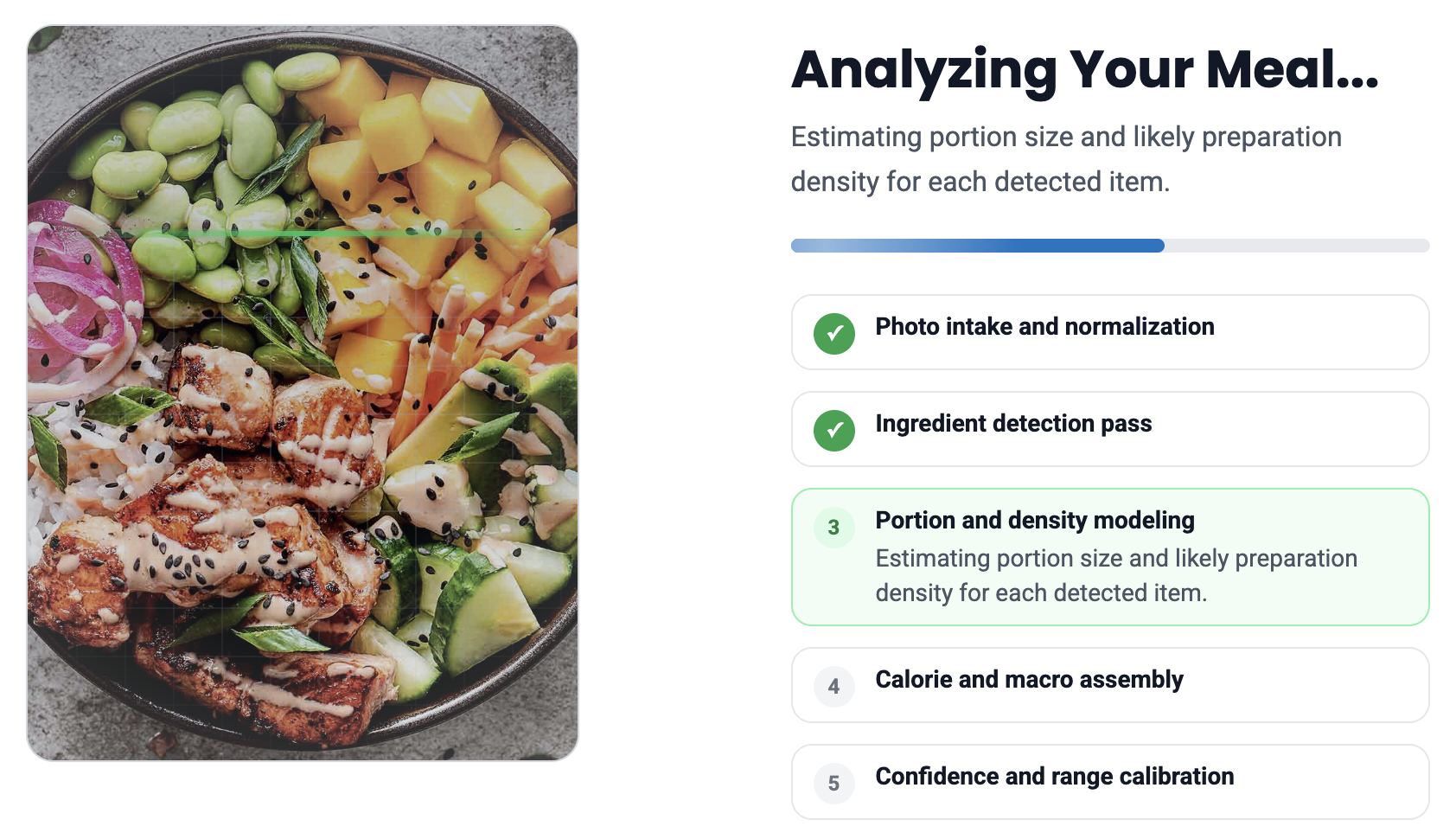
Skoy identifies more than 10,000 foods from a single meal photo and returns nutrition outputs in about 7 to 12 seconds. The analysis includes calories, macros, and key micronutrients, with reported nutrient confidence up to 98% on validated items.
The platform has processed over 150,000 meals across 180+ countries and maintains a 4.95/5 user rating. This level of usage gives it practical coverage for daily meal logging across diverse food styles.
"The accuracy and clarity help our athletes understand what fuels their performance. It's like having a dietitian assistant available 24/7." - Gemma Ray, RDN, Sports Nutrition Partner
New users can start with 3 free scans before moving to a subscription plan.
Macro Tracking and Recipe Generation
Skoy extends beyond recognition into full nutrition planning. Users can generate meal plans aligned with goals like keto, low-carb, or balanced fat loss and apply restrictions such as vegan, gluten-free, or allergen constraints during setup.
The recipe generator can analyze a food photo, infer ingredients, and produce step-by-step cooking instructions with serving context. This helps users recreate meals while keeping tracking and planning inside one tool.
Premium users can export meal plans and macro summaries for sharing with coaches or dietitians, which makes the platform useful in both self-directed and coached workflows.
Serving Size and Multi-Item Analysis
Mixed meals are one of the hardest nutrition-tracking cases. Skoy breaks down multi-part dishes into component ingredients, estimates portions, and returns combined nutrition totals. Reported accuracy for mixed dishes ranges from 62% to 99%, while very complex cuisines can still produce higher error bands that approach 40%.
Premium includes a Serving Adjuster so users can fine-tune portion assumptions when needed. The paid plan is $9.99/month and includes unlimited scans plus full history, while free access includes 3 lifetime scans with core features.
"I was sceptical but it seems to be very accurate! I really liked the recipe suggested from the picture!" - Stephane Delec
Conclusion
Dynamic meal planning can change daily nutrition execution from reactive to structured. Users report meaningful outcomes: planning and shopping time reduced from about 140 minutes to 73 minutes per week, 73% reporting healthier eating patterns, and 86% reporting less meal prep stress. Better planning discipline also correlates with food-cost reductions, with some users seeing monthly expense drops around 23%.
Skoy brings these benefits into one system by combining planning, meal analysis, and nutrition tracking. With a free tier and a $9.99/month premium plan (billed annually), it offers a practical path for users who want stronger nutrition consistency without adding manual workload.
"Skoy is a powerful example of AI making everyday life easier. Whether you're tracking your nutrition or need fast meal inspiration, this app offers impressive value - all from a single snapshot." - Jay web3