AI Calorie Estimation Accuracy: What to Expect

How accurate are AI calorie estimates in real life? This guide explains where performance is strongest, where errors usually appear, and how to improve result reliability.
Published December 25, 2025 · 11 min read
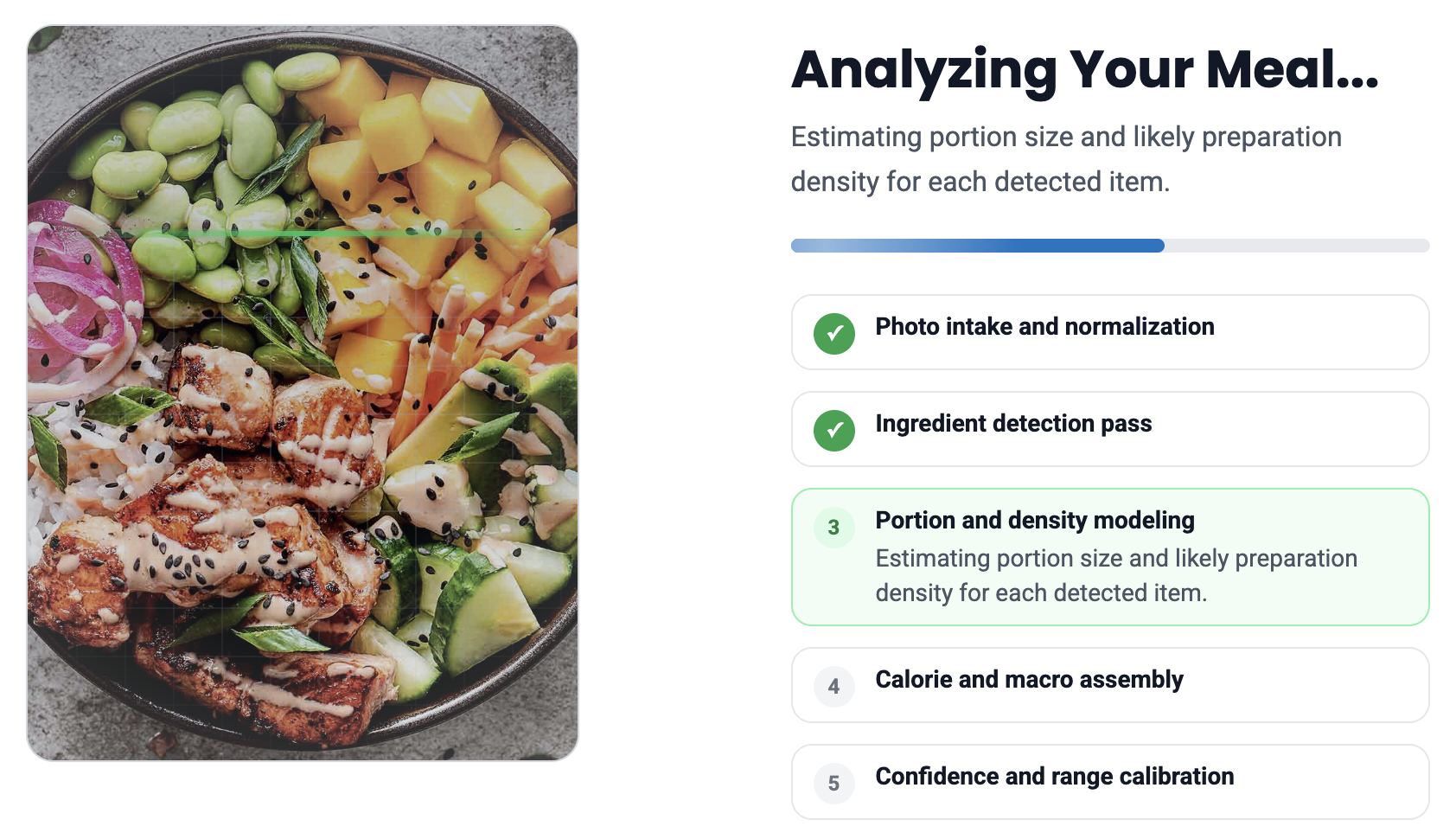
AI Calorie Estimation Accuracy: What to Expect
AI calorie estimators have improved quickly, but accuracy still depends on food type, portion visibility, and image quality. Simple meals with clear components typically produce tighter estimates than mixed dishes with hidden fats or sauces.
Where AI Performs Best
- Single-item meals and straightforward plated foods.
- Common foods seen frequently in model training datasets.
- Images with good contrast and clear ingredient boundaries.
Where Errors Increase
- Deeply mixed meals like stews or layered casseroles.
- High-fat prep methods where oil is not visually obvious.
- Low-light or partially cropped meal photos.
In these cases, use the estimate as a directional guide and focus on trend consistency over single-meal precision.
How to Improve Reliability
Use consistent photo habits, compare estimates across similar meals, and review weekly trends instead of overreacting to one scan. This is the most reliable way to use AI calorie tracking for practical nutrition decisions.